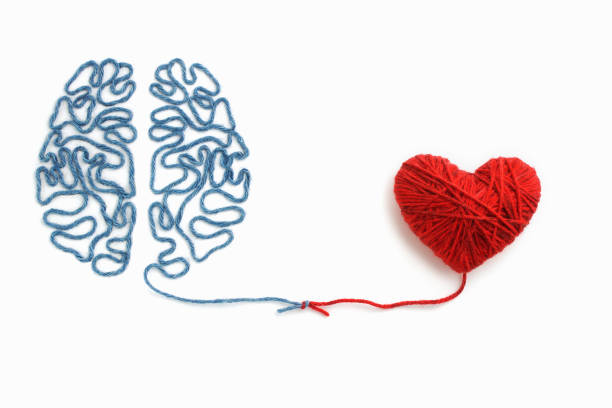
Quantum physics is one of the most fascinating branches of science, as it reveals the unconventional nature of the physical world, where phenomena are not definitively determined before being observed but exist in multiple probabilistic states. This scientific concept, despite its physical complexity, opens a wide door for reflection on human perception and its role in shaping life experiences.
In certain schools of consciousness and self-development, as pointed out by Salah Al-Rashed, it is suggested that humans do not live in a single, fixed reality but instead move within multiple possibilities of their own selves. Their consciousness is the decisive factor in determining which of these possibilities will materialize in their daily experience. While this idea is not a literal extension of the physical theory, it offers a perceptual model that can be utilized to understand the mechanisms of personal change.
From this perspective, humans are not static entities but dynamic systems of thoughts, emotions, and perceptions, constantly interacting with their surroundings. The results individuals experience are simply a reflection of repeated internal patterns; the way they think, their nature of expectations, and their type of attention all contribute to directing behavior, and thus shaping reality.
What is referred to as “observation” in the context of quantum physics can be reinterpreted perceptually as “conscious attention.” When a person directs their attention to a certain aspect of their life and feeds it with thinking, interpretation, and feeling, they enhance their presence within that experience. Conversely, neglecting or ignoring certain aspects causes their influence to gradually fade. Thus, attention becomes a crucial tool in tipping the scales of one possibility over another in life’s possible paths.
From here, one can argue that true change does not begin from the outside but from reshaping the individual’s internal structure. Rather than directly attempting to change outcomes, the focus should be on changing the “pattern” that produces those outcomes. When the pattern changes, responses change, and thus pathways are altered.
This understanding leads to a redefinition of the concept of “choice.” Choice is not limited to major decisions but extends to the subtle details that repeat daily: a thought you adopt, an interpretation you give to an event, a feeling you allow to persist, or a behavior you unconsciously reinforce. These small repetitions, when accumulated, shape the reality the individual lives.
To turn this understanding into practical application, the following steps can be followed:
First: Awareness of the Current Pattern
Change begins with recognizing the prevailing thought and behavioral patterns. This involves noticing repeated thoughts, automatic interpretations, and habitual reactions. Recording these patterns and writing them down helps bring them from the unconscious to the conscious level.
Second: Defining the Desired Version
The individual must clearly define the mental and behavioral qualities that represent the version they aspire to. How do they think? How do they act? How do they deal with challenges? This definition creates an internal reference for measuring progress.
Third: Breaking the Automatic Repetition
Repetition is what solidifies reality. This is why it is important to consciously introduce changes to daily behaviors, even if they are small. Choosing a different reaction or making an unusual decision helps dismantle the old pattern and opens a new path.
Fourth: Managing Attention
Attention is the most crucial resource in shaping experience. Therefore, directing it towards possibilities rather than limitations, and towards solutions rather than problems, contributes to reshaping perception and, in turn, changing outcomes.
Fifth: Conscious Repetition
It is not enough to make a decision to change; it must be supported by daily repetition of new thoughts and behaviors. Continuity is what turns change from a temporary experience into a stable pattern.
Sixth: Practical Activation
Change is not complete without an internal translation into tangible actions. Every new perception should be met with behavior that reflects it in reality, so it solidifies and becomes part of the identity.
In conclusion, humans are not confined to a fixed reality but move within multiple possibilities, determined by their consciousness and repeated choices. While the link between quantum physics and human experience remains more of a reflective proposition than a direct scientific one, it offers an inspiring framework for understanding the power of transformation. Change does not happen suddenly; it is gradually formed with each new thought, every different attention, and each conscious choice that brings the individual closer to the version they aim to achieve.